
Plano Previous Residents by Era
Previous residents of a Plano address leave different evidence in each era. Begin with the Collin County Central Appraisal District parcel record, then use its legal description to locate the relevant instrument in the County Clerk index. That path establishes a title trail. It does not establish that every named owner occupied the parcel. For the household layer, use verified directory scans, library holdings, released census schedules, newspaper notices, and obituary research. The County Clerk does not publish a safe earliest year for its online index, so an older gap calls for manual books, microfilm, or a request through the Clerk rather than an assumed cutoff.
| Evidence | Known period | Where to use it | What it can establish |
|---|---|---|---|
| County deed index | Current online run, earliest year not published | Collin County Clerk online search | Parties, recording date, instrument type, and legal description |
| Manual deed books and microfilm | Older coverage to confirm with the Clerk | McKinney counter, mail, or written request | Earlier index and image access |
| Plano city directories | Verified 1948, 1974, and a 1976 address-page sample | UNT, CCGS, and Haggard collections | Printed names, addresses, and business or household notation |
| Federal census | Released schedules under the 72-year rule | Library and archival research channels | Household composition on the census date |
| Plano permits and Sanborn maps | Permit depth not published; Plano map verified for 1890 | eTRAKiT, Library of Congress, and UNT | Work history or building and street context |
Use the date on each record as part of its meaning. A deed is recorded on one date, a directory is issued for a publication period, and a census observes one official date. Those dates can be close, yet they answer different questions.
Note: A missing online result can mark a coverage gap, a spelling difference, or an older record book, not proof that no earlier Plano resident existed.
Plano Addresses Start With CCAD
The CCAD Property Search is the practical first stop for an address history. Its owner and advanced modes can use an owner name, street number, street name, property or geographic ID, subdivision, legal description, property type, tax year, and related criteria. The appraisal card can show an appraised owner, mailing address, physical or situs address, property identifiers, values, exemptions, inspection notes, and a legal description. The site says its property search updates nightly.
Copy the legal description exactly. It commonly carries a subdivision plus lot and block information that is more stable than a street label. A mailing address is only correspondence information. It may be a post-office box, an agent, a trust, a business address, another home, or an old entry. Treat it as a lead that requires a separate record, not as proof of residence.
- Parcel
- A defined piece of land in the appraisal system, usually tied to a property or geographic ID.
- Situs address
- The physical address used to locate the parcel.
- Legal description
- The lot, block, subdivision, or other land description used to identify property in recorded instruments.
- Chain of title
- A sequence of recorded transfers connected by the same parcel or legal description.
Plano Legal Descriptions Bridge Records
Collin County Clerk instructions specifically direct an address researcher to CCAD for the legal description before using the land-record search. This is the key local bridge when a deed uses a lot and block while a modern search begins with a numbered street. If a description changes, compare it with a plat, replat, release, subdivision name, or related instrument. Do not assume that two records are unrelated just because a street label was later altered.
The Clerk's land-recording guidance also cautions that its online database is not the official repository and may be incomplete or affected by HB 4350 redactions. Use the index to identify a document, then inspect or order the instrument when a conclusion depends on its full contents. The page also provides the copy-request route and current fee information.
Trace Plano Owners Through Deeds
The Collin County Clerk's official-record index supports name, document-number, and legal-description research. Search the current owner as a grantee, then read the deed to identify the grantor, the instrument number, the recording date, document type, and legal description. Search that seller as a grantee in an earlier transaction. Repeating this role change works backward through the recorded title trail. Search both roles, because a person can appear once as buyer and later as seller.
- Find the current parcel in CCAD and save its property ID, geographic ID, subdivision, lot or block, situs address, and legal description.
- Search the named owner in the Clerk index and compare the instrument's legal description with the parcel record.
- Record the document number, recording date, grantor, grantee, instrument type, and image or copy status.
- Search the grantor as a prior grantee, then repeat the comparison for each earlier deed.
- When the web search no longer reaches the needed period, ask the Clerk about manual books, microfilm, public terminals, or a written search and copy request.
A grantor transfers an interest. A grantee receives it. Those roles describe the recorded transaction, not necessarily who stayed at the address after closing. The online cutoff is not stated in the current County Clerk materials, so it is better to state the unknown plainly than to fill it with a date.
The local Plano Clerk counter at 900 E Park Blvd is currently closed until further notice because of flooding. The central recording and copy route is the County Clerk at 2300 Bloomdale Rd, Suite 2106, McKinney, with online, mail, and counter alternatives documented by the County.
Plano Street Names Need Translation
Plano's older records reflect a railroad-centered town grid. The Houston and Texas Central Railway arrived in 1872, and the town was platted in 1873. The official historic street-name sheet supplies the translation layer for old directories and deeds. K Avenue appears as Main, 15th Street as Mechanic, 15th Place as Masonic, and J Avenue south of 15th as E. Rail Road. Other aliases appear in the same official list.
Keep the printed historic form in the research notes, then search the current and historic names separately. A change in spelling can be a reason an address section fails, particularly when a replat changed the legal description as well. The City of Plano street-name reference is the source to consult before silently converting an old address.
Plano Maps Put Past Residents in Place
Maps do not name every former household, but they can explain the setting around an address. The Library of Congress Plano Sanborn record provides a two-sheet July 1890 fire-insurance map. It can show a building footprint, use, street label, railroad context, and fire-risk notation for that map date. It is not a resident list. Pair it with a deed, directory, census, or obituary before attaching a person to a building.
UNT's Texas Sanborn collection supplies a broader Texas map path. For later property changes, Plano eTRAKiT is the city gateway for permit, property, project, inspection, license, and violation records. The research captured a 2022 permit sample, but it did not verify the full searchable archive depth. A public permit can name an owner, applicant, or contractor for a project. It cannot prove continuing occupancy.
Plano Previous Residents in Directories
Deeds follow ownership. Previous residents are more often visible in address sections, newspapers, and census schedules. The verified Plano directory evidence includes a 1948 directory, Polk's 1974 directory, and a 1976 numerical-page sample. The 1976 page illustrates why the scan matters: an address section can intermix personal names and business entries, and OCR can join columns or misread a surname. Record the volume, publication year, image page, printed name, and any uncertainty.
For the available collections, begin with the Plano directory collections route, then use the Haggard Genealogy Center, CCGS, UNT, and TSLAC for shelf, microfilm, newspaper, and library-database alternatives. TSLAC says staff do not search or transcribe city directories remotely by phone or email, so an on-site visit or local-library assistance is the practical fallback.
- Locate the address or surname in a directory's alphabetical or numerical section and preserve the exact printed street form.
- Check the address section for every printed name at the number and nearby numbers, then compare the alphabetical entry for spouse, business, or telephone notation.
- Match the directory year to the relevant released federal census schedule, recognizing that a directory and census can reflect different dates.
- Use newspapers, obituary notices, probate files, and recorded deeds to test whether a move, death, inheritance, or same-name match explains a change.
Note: An address entry is a period clue, so compare its scan and date before using it to describe who lived there before.
Plano Genealogy Channels for House History
The Texas State Library city-directory guide points to Austin print and microform, the UNT Portal to Texas History, UT's Briscoe collection, WorldCat, and library access to licensed research tools. It also makes a practical limitation clear: staff do not perform remote directory searches or transcriptions. Haggard's Genealogy Center and the Collin County Genealogical Society are useful local channels for asking what is currently on the shelf, including directories, yearbooks, newspapers, microfilm, obituaries, and Collin publications.
That state-library guide is shown below as a research-channel reference.
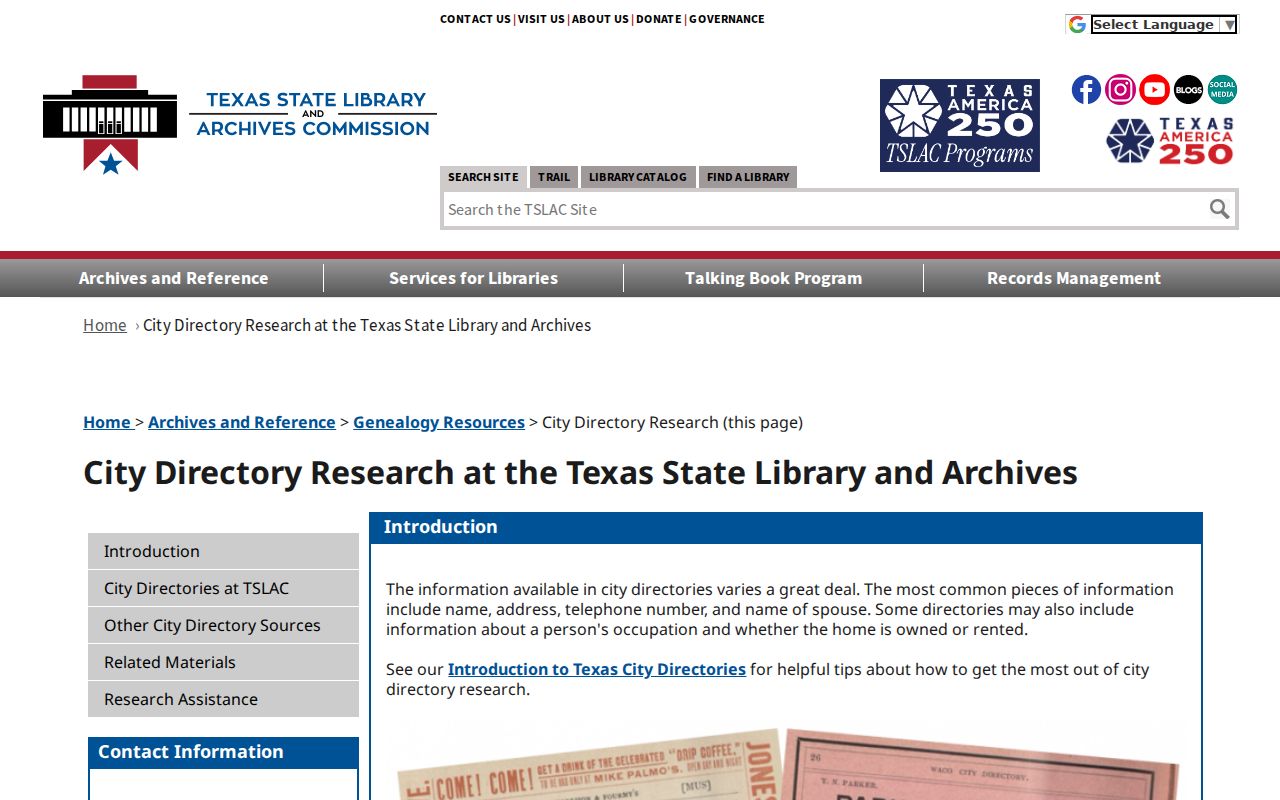
The guide helps route a search toward documented holdings without claiming that a particular Plano run is complete or available by remote request.
Plano Previous Residents and Clerk Copies
The Collin County deed-index search is the online locator for the recorded chain, subject to the County's completeness and redaction warning.
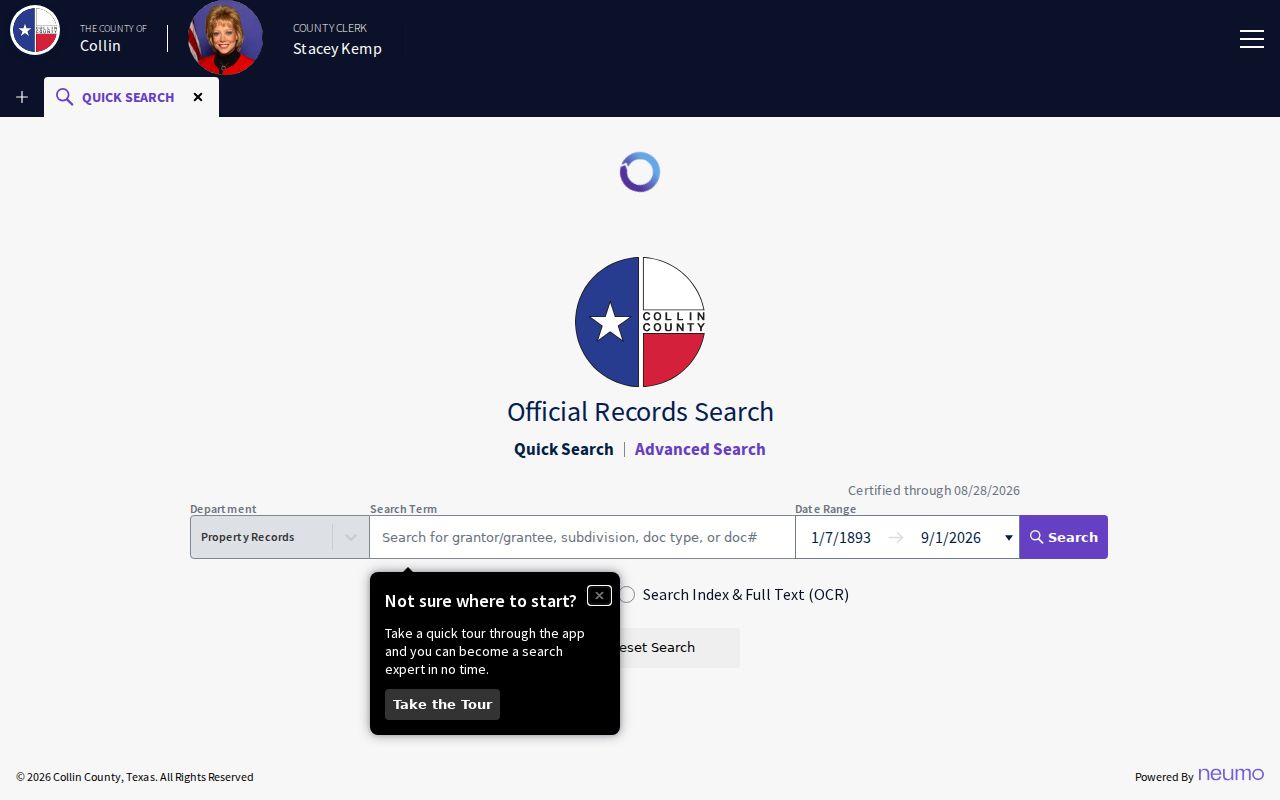
Use the displayed index to capture a document number, then use the Clerk's online form, mail route, or counter route when a document image or certified copy is needed.
Plano Previous Residents Require Care
Past residents research has clear limits. A title record identifies parties to a recorded instrument. An appraisal card identifies the appraised owner and parcel details. A historical directory can identify a printed person or business at an address for its own period. None proves every person who stayed at an address, and an absent entry is not a final answer. Protected addresses, sealed material, victim information, and private customer lists remain outside this work.
A careful log makes the result more useful: retain the source, record date, address form, party role, instrument or page number, and the reason a match is tentative. That preserves the distinction between a documented prior owner and a likely past household.