
Plano Resident Lookup Evidence
One name does not create a reliable Plano resident lookup. The Collin County Central Appraisal District, or CCAD, can associate an owner with a parcel, mailing address, situs address, legal description, and property identifiers. That is ownership evidence, not a census of everyone at the address. Texas My Voter Portal can narrow an identified voter by name, Collin County, date of birth, and ZIP. Court indexes can locate a case and its custodian. State vital indexes, official filings, and public license searches can supply separate context. Keep the role of every result clear rather than treating owner, voter, court party, licensee, and historical directory occupant as interchangeable.
| Record | What it can confirm | Plano route | Access |
|---|---|---|---|
| CCAD appraisal roll | Owner, parcel, mailing and situs details | CCAD Property Search | Free, updated nightly |
| Voter registration | Registration status and precinct context | Texas My Voter Portal | Identified-person lookup |
| Court index | Case locator, parties, court and status | Collin Judicial Search | Online window varies by court |
| Vital index | Event clues for name, date and place | Texas DSHS indexes | Copies have eligibility rules |
| Business or license record | Public filing or credential affiliation | TDLR License Search | Fields vary by database |
When an address is known, begin with CCAD. When only a full name and date of birth are available, My Voter Portal may be the narrower starting point. A deed party, court case, or historical notice is then a corroborating path, not a shortcut to claiming a present household.
Plano Court Records for a Resident Lookup
Collin Judicial Search is the county locator for District Court, County Courts at Law, and Justice Court matters. The county describes civil and probate coverage generally from 1984, District criminal matters from 1988, and County Courts at Law criminal matters from 2000. Plano Municipal Court keeps a separate citation search. A returned case number, court, party name, filing information, and status can identify the clerk who holds the file, but a docket entry is not identity proof and may not include the document image. Sealed, juvenile, expunged, confidential adoption, victim, and protected family-law material can be absent or restricted.
Collin County Sheriff's inmate information page is the source for this current-inmate and recent-release screen. It is a custody locator, not a complete historical arrest record or a finding of guilt.
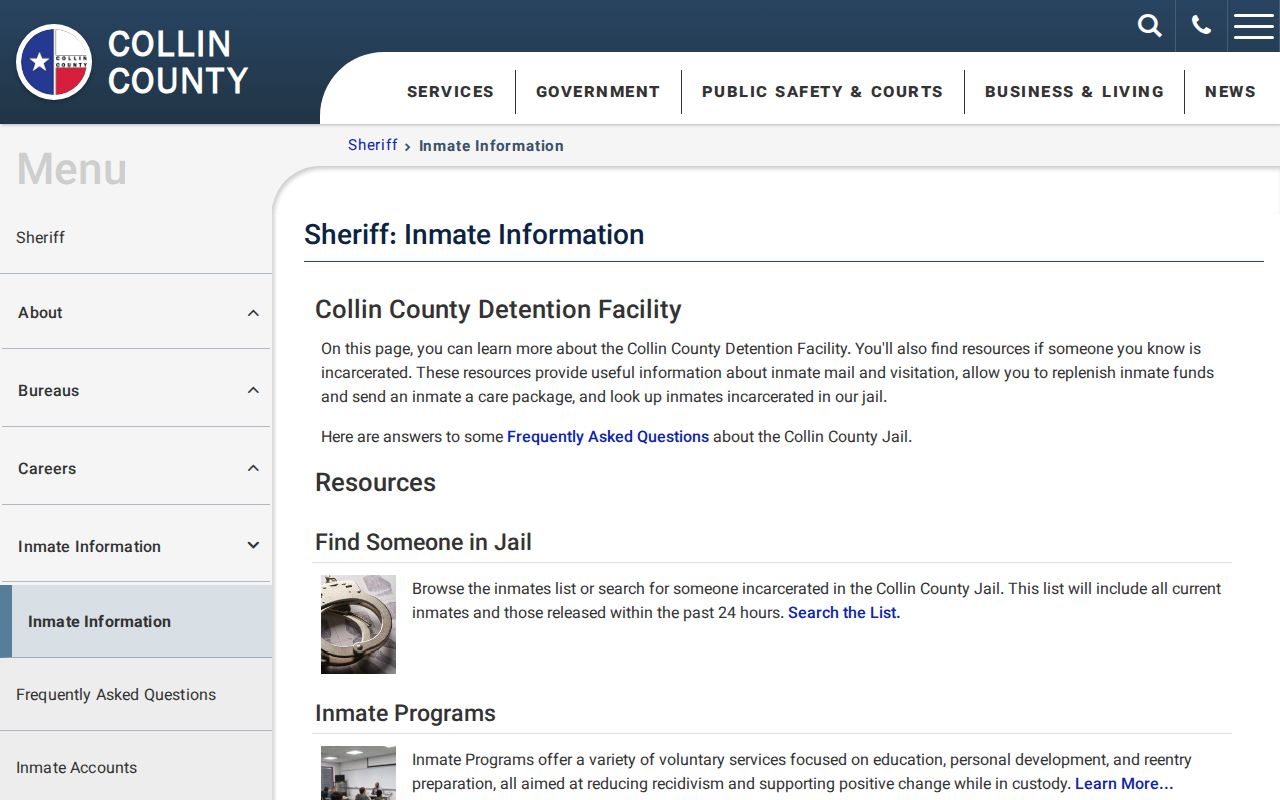
Use the agency's current status and date before relying on a custody result. The Sheriff directs agency-created reports to the originating records unit, while older court matters may require a clerk's manual search.
The District Clerk accepts written requests at its McKinney office, by mail, or by email, and has public-terminal and counter routes. Its request form asks for a complete name, date of birth, cause number if known, court, requested record, date range, delivery details, and payment. The research lists a $5 search charge, plus stated copy and certification fees. Before the online coverage windows, ask the respective clerk to search the historical manual files. A missing online result does not prove that no case was filed.
Plano Property and Voter Matches
CCAD is a useful first check for an owner name. Its search accepts an owner name in Last Name First Name order, street number, street name, property ID, geographic ID, legal description, subdivision, neighborhood, and other advanced criteria. Simplifying the name or street suffix can help when a precise search misses. The parcel card can bridge a street address to the legal description needed in the Collin County Clerk deed index. CCAD cautions that legal descriptions and acreage shown for appraisal use should be verified for legal purposes, and a mailing address can differ from the property situs.
For an identified voter, My Voter Portal uses name, county, date of birth, and ZIP. A result may show registration status, VUID, voter name, county, precinct or district context, and voting-location information. It does not establish every person who lives at a property. Collin County Elections offers a separate paid county voter file through its Election Store. That file has statutory use restrictions and should never be treated as an anonymous street roster. The Elections office can answer procedural questions by phone, email, counter, or mail request.
Verify a Plano Resident Across Records
A sound verification keeps the role and date of each record intact. The objective is not to build a dossier. It is to determine whether separate official entries likely refer to the same named person. A property owner can have another mailing address. A voter marked Suspense may be responding to address-confirmation mail. A court party with the same surname may be unrelated. Record the spelling returned by the portal, the custodian, search date, record date, address type, record number, and confidence level. Then compare sources that answer different questions.
- Search CCAD by the name, then save the property ID, situs address, legal description, and the exact owner spelling if a likely parcel appears.
- Use the legal description or party name in the Collin County deed search, and note the document number, party role, recording date, and instrument type.
- Check the county or municipal court locator for the name and realistic variants. Use a case number to ask the clerk for the correct file, rather than guessing from a name match.
- Use a vital index or historical directory only as a second date, place, or family bridge. Request a certified record only from the lawful custodian and only when eligibility rules are met.
- Docket
- A court's running list of case events. It helps locate a file but is not always the full record.
- Index and image
- An index points to a record through names, dates, or numbers. An image is the scanned document, which may be unavailable, redacted, or ordered separately.
- Certified copy
- A copy authenticated by its custodian. It can have different fees and eligibility requirements from an ordinary index or copy.
Note: A date on an index may be a filing, publication, or registration date rather than the date a person moved or an event occurred.
Texas Vital Indexes for Plano Names
Texas DSHS keeps statewide birth, death, marriage, and divorce indexes and provides verification routes. Birth records become public on their 75th anniversary and death records on their 25th anniversary under Texas Government Code Section 552.115. Those opening rules do not make newer certified records generally available. Health and Safety Code Chapter 191 controls qualification for certified copies. The Collin County Clerk can issue local certified birth, death, and marriage records in the appropriate circumstances, while a divorce decree comes from the District Clerk that granted it.
The DSHS birth and marriage or divorce applications offer online, mail, and most walk-in routes, with identification, signature, and relationship requirements for certified records. The agency's indexes can provide a lead without revealing a full certificate. For an older family line, pair the limited index with CCGS and UNT newspaper material, cemetery research, county records, or a library collection. The Texas Public Information Act cannot bypass a vital-record eligibility rule.
Plano License and DBA Affiliations
Public business and professional records can clarify a name variation or affiliation, but they should not be treated as a home-address directory. Texas SOSDirect provides entity filing routes, while the Collin County Clerk handles assumed-name filings for unincorporated businesses. The Clerk says a county assumed-name search can be done online, in person, or by mail, and its research identifies a $10 mail-search charge. A registered agent, officer, or business address is a role in a filing, not proof of a person's current residence.
Texas Department of Licensing and Regulation License Search is the source for this official license-search screen. It offers establishment, individual, and school routes, with a required type and at least three characters for a name search.
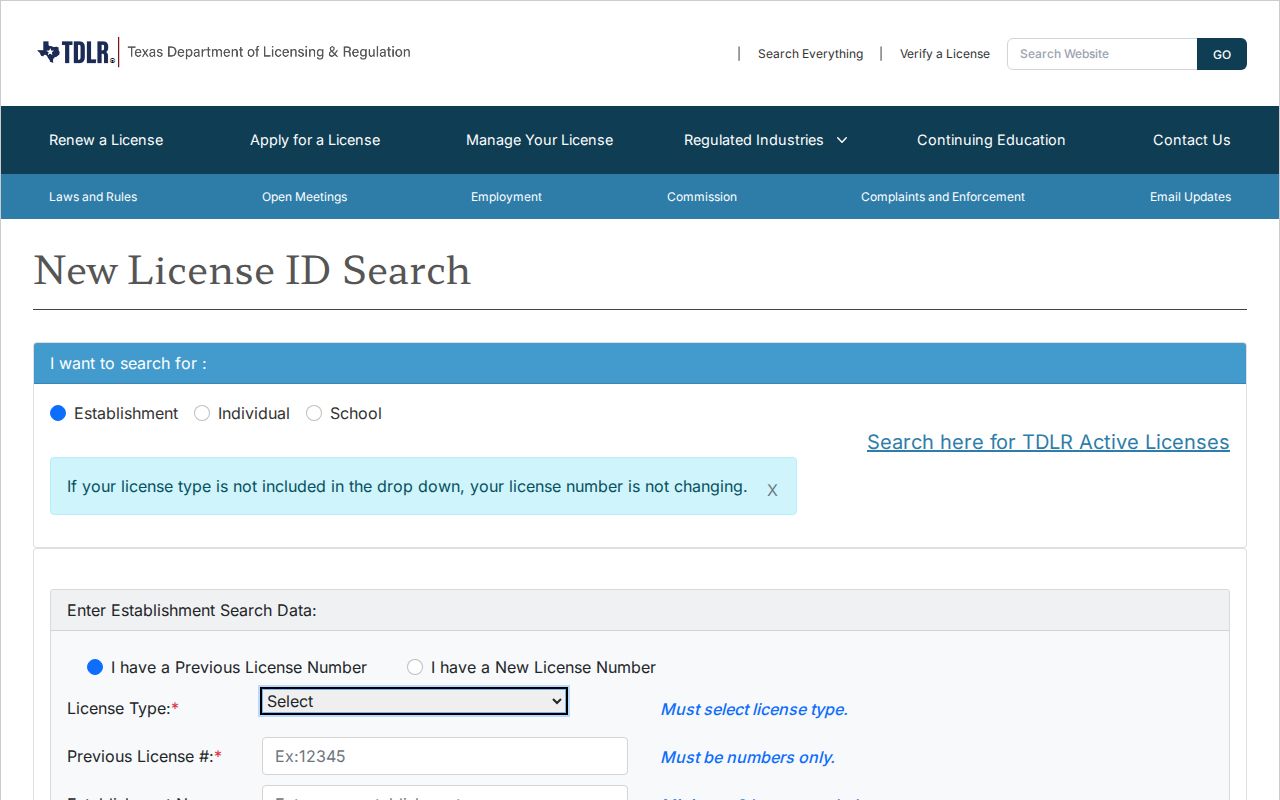
The result fields vary by board and license type, so preserve the official status and expiration date instead of assuming a uniform result. State-board phone or email channels, SOSDirect copies, the County Clerk counter or mail route, and Plano permit staff are the alternatives when a web screen lacks the needed historical detail.
Plano Family and Heir Research
A family trail often uses records in sequence rather than one name search. An obituary or historical directory can supply a relative, former address, or date. A probate or heirship case can identify a county court file. A recorded deed or affidavit of heirship can then connect a legal description to a parcel, while CCAD can show the appraised ownership record on the inspected date. None of those entries alone proves a current household. This narrower approach is useful when reconnecting a family line or documenting an estate question because every step has a defined custodian.
For a former classmate or old acquaintance, historical city directories, yearbooks, newspapers, and library archives are safer starting material than current personal details. The research did not locate a verified current statewide adoption intermediary or eligibility page, so a birth-parent search should go only through the applicable official Texas adoption process rather than inference from an index. Historical evidence still needs a second independent source before it is linked to a modern record.
Private Data in a Plano Resident Lookup
Texas makes many government records available while protecting vital records, driver's-license information, protected voters, juvenile and sealed court records, victim details, and Address Confidentiality Program information. The Texas ACP supplies a substitute mailing address and mail-forwarding service for eligible participants. Voter web suppression can also apply to eligible protected people. Do not try to reconstruct redacted land-record information or publish a protected address. County Clerk online land records may be incomplete or altered by redactions under House Bill 4350, so a legal question belongs with the official instrument and its custodian.
If a record is inaccurate, ask the custodian for correction. CCAD has a property and mailing-address correction process, Elections handles registration updates, court corrections belong with the clerk, DSHS handles vital amendments, and the Secretary of State or County Clerk handles the applicable filing correction.
Plano Resident Lookup Fallbacks
Dynamic portals and gaps in online coverage make alternate access important. The Texas Public Information Act, Texas Government Code Chapter 552, is a route to request existing non-exempt government records. It does not require an agency to create a new list or conduct an open-ended person search. For court material, use the clerk's public terminal, written request, mail, email, or counter service. For land records, use the Clerk's copy-request form and the McKinney route when the Plano County Clerk office remains closed because of flooding.
For historical name evidence, Haggard Genealogy Center, the Collin County Genealogical Society, UNT collections, the Texas State Library and Archives Commission, and library databases can be better fits than a current index. A commercial people-search category may combine public, broker, and user-supplied data, but stale addresses and wrong-person merges remain common. The official custodian record controls. For current public-safety information, use the relevant Sheriff, Plano Police, state, or federal agency rather than treating a general court or property result as a substitute.
Note: When a result is absent, retry a maiden name, initials, old street name, city or county variation, and the source's stated coverage window before drawing a conclusion.