
Plano Historical Directory Collections
Plano city directories are best described as verified examples and holdings, not as a claimed shelf sequence. The Collin County Genealogical Society, or CCGS, partners with the University of North Texas Portal to Texas History. Its partner page supports full-text, catalog metadata, title, subject, creator, and name searching, plus Guided, Advanced, and Proximity modes. The page listed a City Directories collection at inspection, but the collection page does not publish every Plano edition year. A search result is therefore the start of volume checking, not proof that a missing year was never printed.
| Collection | Verified years or scope | Where held | Access route |
|---|---|---|---|
| Plano directory, 1948 | 1948 verified; complete run not published | CCGS and UNT Portal to Texas History | Digitized page images and OCR |
| Polk's Plano directory | 1974 verified; 1976 numerical-page sample verified | UNT and CCGS digitized items; local holdings need confirmation | Item and page viewing, with scan checking |
| CCGS City Directories collection | 26 items shown at inspection | UNT Portal to Texas History | Search title, name, metadata, or full text |
| Genealogy Center directories | Exact Plano shelf years not published | W.O. Haggard Library | Ask staff for directories, reverse volumes, microfilm, and databases |
| State and university directories | Texas collection-level holdings | TSLAC and UT Briscoe Center, Austin | Catalog and reading-room research |
The local collection has a firm digital starting point: the 1948 Plano directory has a title page identifying the city, year, and CCGS/UNT provenance. It confirms that edition, not a first or final directory year. Polk's 1974 item is described by UNT as a 628-page individual and business directory with address listings and advertisements. The historical search should retain that modest level of certainty rather than creating a continuous range the sources do not support.
Note: Treat a missing online result as a reason to ask about shelves, microfilm, or manual collection access, not as proof that no volume exists.
Plano City Directories at CCGS
The CCGS partner collection at UNT gives Plano research a useful digital base beyond one book. At inspection, it listed 4,240 items across 18 titles and eight collections. The same page showed 4,076 items in the Texas Digital Newspaper Program grouping, 138 Collin Chronicles and Records of Collin County, Texas items, and 26 city-directory items. Those figures describe the page at inspection and can change, so use them to understand the collection's scale, not as a permanent count.
The CCGS digital holdings page is pictured here. Search a surname in full text, then open the image page and catalog record before transcribing a name or address. Historical newspaper results can supply obituary notices, civic references, and address clues beside a city-directory entry. They do not make the directory itself complete.
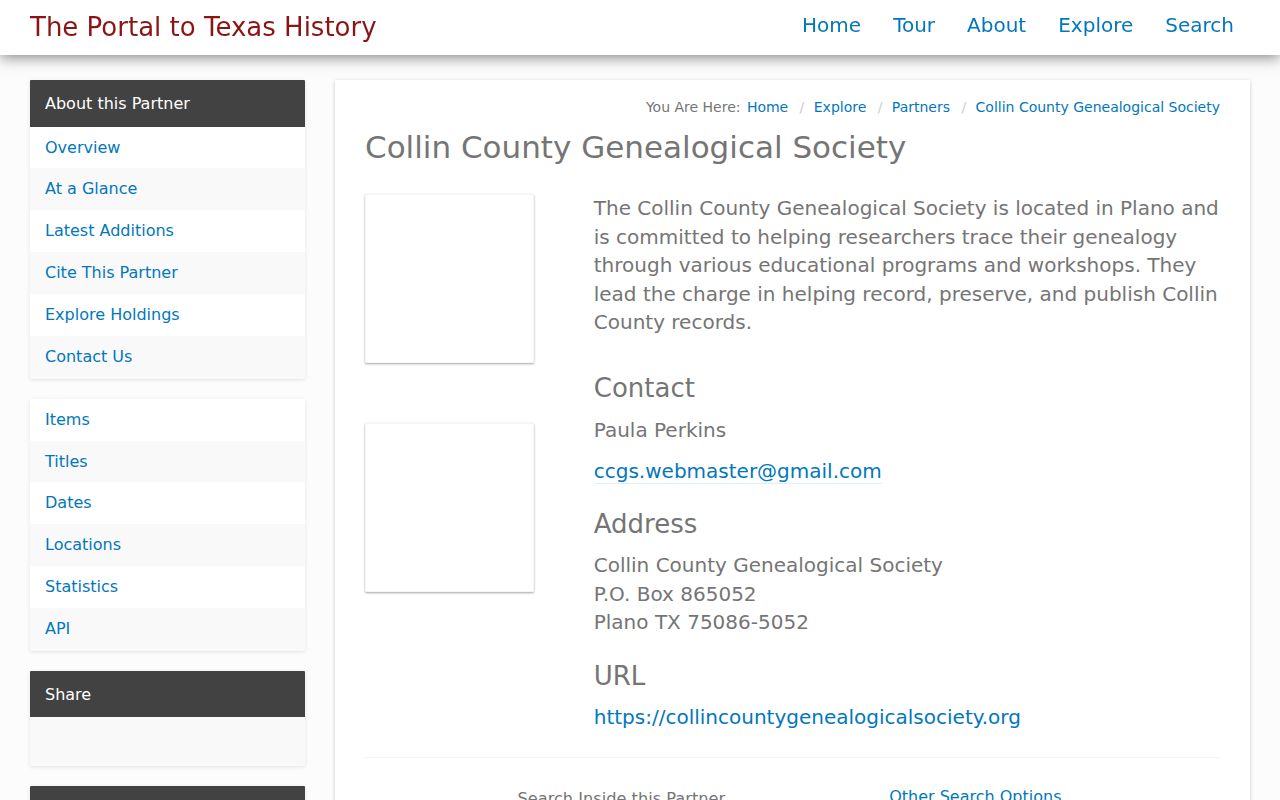
The holdings view also makes the fallback chain concrete. When a volume is absent from the city-directory subset, search partner newspapers and CCGS publications, ask the Genealogy Center, then use the Texas State Library and Archives Commission or university catalogs. Record the collection name and page URL with each finding so another researcher can recheck the image.
Plano Genealogy Directory Routes
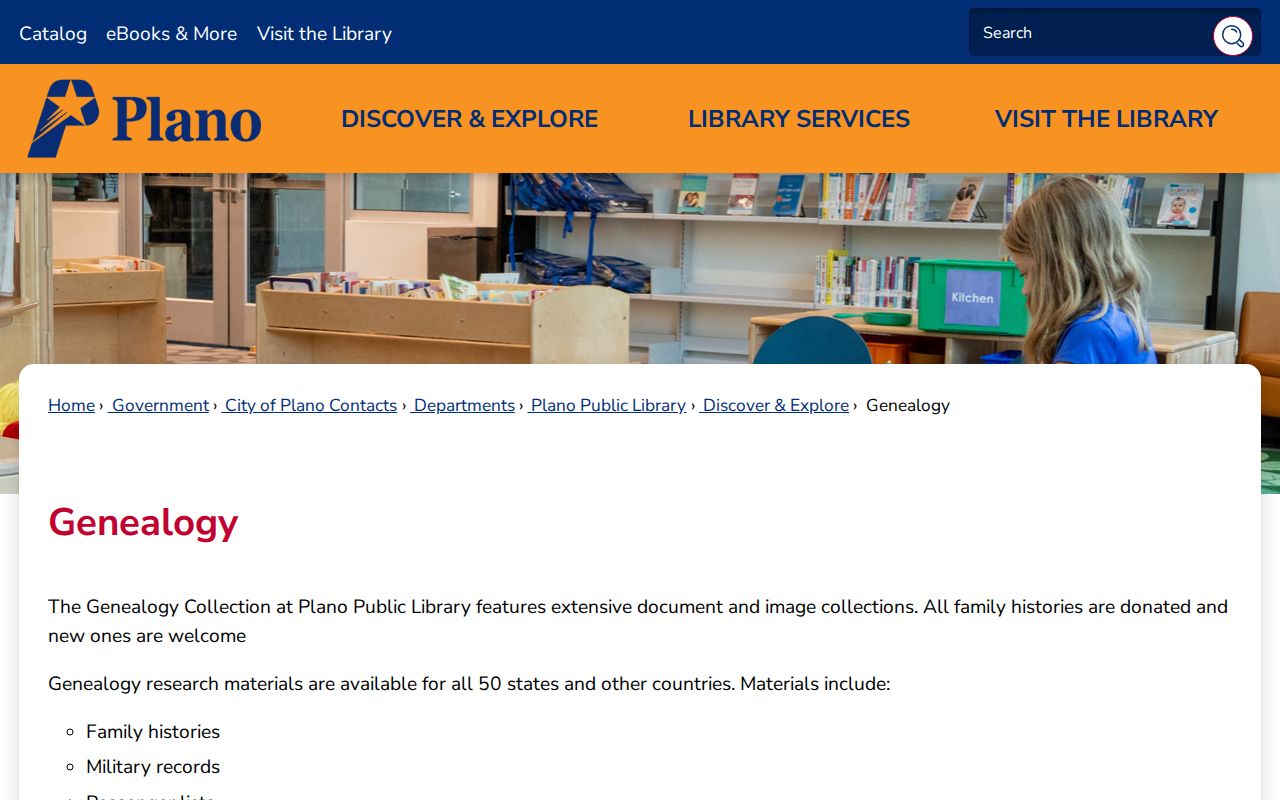
W.O. Haggard Library's Genealogy Center is the practical local counter for a Plano directory search. Ask staff for directories, reverse or criss-cross volumes, yearbooks, obituary indexes, newspapers, microfilm, CCGS books, and licensed Ancestry Library Edition or HeritageQuest access. Plano's library calendar has also listed a City Directories genealogy workshop, evidence of active public instruction. The inspected pages did not publish a dependable shelf-level list of every Plano publisher, reverse-directory volume, or year.
Plano's genealogy gateway points researchers toward the local Genealogy Center. It is a better first contact than guessing what an unlisted shelf contains. For city-held maps, photographs, microfilm, or records-management material, identify the city department that created the material; municipal records stay with the creating department rather than automatically moving to a county office.
If the local route cannot supply the needed edition, use the Texas State Library and Archives Commission's city-directory guide, UNT, the UT Briscoe Texas Directories collection, WorldCat, and Library of Congress finding tools. TSLAC's Austin Reference Reading Room is an in-person option, but staff do not perform remote searches or transcriptions by phone or email. That limitation makes a precise surname, year, publisher, and address especially helpful before a visit.
Read a Plano Directory Entry
Reading a Plano directory starts with the volume's own front matter. A historical entry may contain a person or business name, street address, telephone notation where present, household notation, a business context, and the edition or publisher. Some volumes use initials, symbols, widow notation, or other abbreviations. Their meaning is period-specific. Do not expand initials, infer a relationship, or assign a meaning to a mark until the key in that exact volume supports it.
| Name line | Printed surname, initials, given name, or business wording; retain spelling exactly. |
|---|---|
| Address | House number and street as printed, which can use an earlier street name. |
| Telephone notation | Present only where the edition prints it; compare the volume's conventions. |
| Household notation | Parentheses, abbreviations, or related text only when the volume actually shows them. |
| Business context | Printed activity or organization wording that can distinguish similar names. |
| Edition reference | Publisher, year, page, image URL, and any OCR uncertainty. |
- Criss-cross directory
- An address-order section that lets a researcher begin with a street and number.
- Householder index
- An alphabetical arrangement of printed household entries when the volume includes one.
- Abbreviation key
- The publisher's explanation of the marks and shortened terms used in that edition.
In the verified 1948 item, the title page supplies the year and provenance, not an occupant example. A 1976 numerical page supplies address sequence, surname or initials, some business names, and page location. A line can continue across columns or a page turn. The scan, not a bare OCR line, is the primary evidence.
Plano OCR Scan Limits
OCR is a locator, not a transcription authority. The 1948 Plano directory image below confirms the title, city, year, and CCGS/UNT source. It does not establish the first Plano directory, the final printed one, or the contents of every later book. Use the item page and page image together when documenting a local directory find.
The 1976 numerical page is the practical warning. Its OCR places Plano Apartment Locator in a sequence with individual address entries. Columns can merge, a surname can be read incorrectly, and a business line can interrupt what appears to be a household run. Compare the image with the alphabetical section, note the page, and preserve uncertainty when the scan is unclear.
Note: A printed directory entry ties text to a particular edition date; it does not by itself prove identity or a continuous presence at the address.
Plano City Directories and Old Streets
Old street names are central to a useful Plano directory search. Plano's railroad-oriented grid took shape after the 1872 railway arrival and the 1873 plat. The official historic street-name sheet identifies Main as K Avenue, Mechanic as 15th Street, and Masonic as 15th Place. It also links J Avenue south of 15th with E. Rail Road and I Avenue south of 15th with Mill, Church, or Interurban in older references.
Copy the street exactly as a directory prints it, then search the official current, original, and alternate-name table before comparing a modern parcel or map. Do not back-project a current postal ZIP into a 1948 directory. Older directory material normally prints a street address rather than a modern ZIP, and postal geography, municipal limits, subdivisions, and land parcels are separate systems.
For a modern address-keyed parcel or deed chain, use the Plano Street Directory. That record trail is deliberately separate from the historical shelf, which is better at placing a printed entry within the period of its edition.
Trace a Plano Directory Family
A Plano directory can help trace a family line when each edition is treated as a dated observation. Start with the known surname or address. Determine whether the book has an alphabetical section, a numerical section, or both. Then search the other arrangement for the same printed spelling. Compare a move, spouse notation, business wording, and surrounding address entries across editions, but never turn one matching name into a conclusion without a second record.
- Record the edition year, publisher, page, exact spelling, and street wording from the scan or physical volume.
- Search the address section for every printed entry at that number, then check the alphabetical section for the same name.
- Read the abbreviation key before interpreting initials, parentheses, telephone prefixes, or other notation.
- Pair directory dates with released federal census schedules under the 72-year public-release rule, remembering that a census is a date-specific count and a directory reflects a publication window.
- Use newspapers, obituary notices, deeds, probate, and cemetery material to distinguish a move, a same-name person, or another change in the trail.
A person who disappears from one volume may have moved, died, been omitted, changed a printed form of name, or never been included in that publisher's coverage. For a current confirmation, use an independent official record and the Plano resident lookup route rather than presenting a historical directory as a current list.
Plano Directory Collection Gaps
Several gaps should remain visible in any Plano directory search. Research verified 1948, 1974, and a 1976 page sample, but did not verify the first Plano edition, the last printed edition, the complete local shelf run, or every reverse-directory year. The CCGS partner page's city-directory count is a collection snapshot, not an assurance that all items are Plano volumes. Its combined newspaper material reaches much further than its directory subset.
There is also no verified city-run interment-name search, complete local funeral-home index, comprehensive alumni directory, or public civic membership roster. CCGS, library newspapers, cemetery surveys, and formal vital or county records may provide a careful historical trail, but each source has its own access rules. Certified vital copies require eligibility, while older public indexes can be useful leads without replacing the custodian's record.
Use all available channels when a scan is missing: UNT online material, the Haggard counter and programs, CCGS, TSLAC or university reading rooms, public microfilm, county records, and a written request to the proper city or county custodian for existing records. Do not ask a public-information office to create a new directory compilation. Texas public-records law requires access to existing non-exempt records, not a new research product.
Plano Directory Collection History
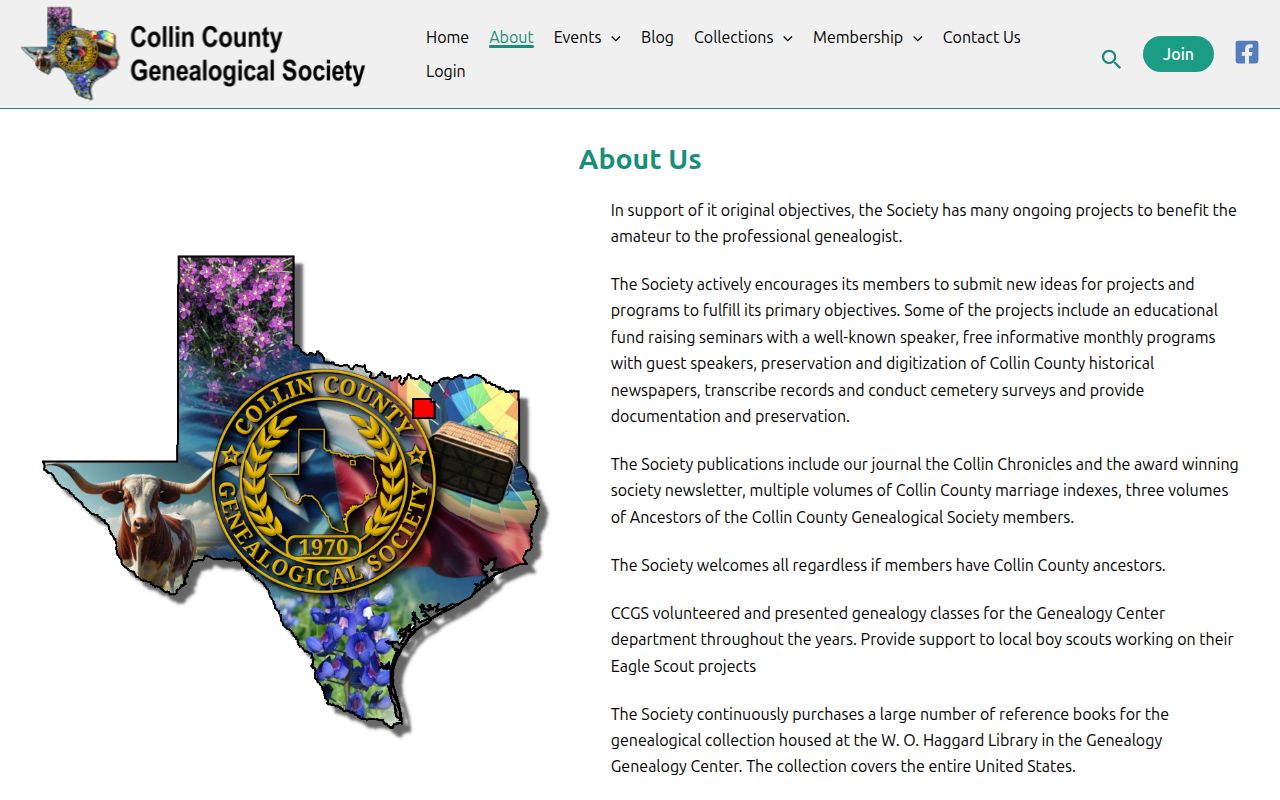
The social history behind the Plano directory collections helps explain the local access network. CCGS began in October 1970 as the Plano Genealogical and Historical Society, moved into Harrington Library in January 1971, and adopted its current name in November 1979. It now supports the W.O. Haggard Library Genealogy Center through newspaper digitization, transcription, cemetery surveys, publications, reference books, and classes.
The Collin County Genealogical Society's history page is shown here. The society's work connects a 1948 directory, Polk volumes, newspapers, cemetery projects, Collin Chronicles, and library instruction without claiming that any one source is complete. Its story also explains why the local library, society, and UNT collection should be used together.
The verified directory timeline can be stated plainly: a Plano directory is confirmed for 1948, Polk's Plano directory is confirmed for 1974, and a 1976 address-page sample survives online. First and last years remain unverified. That clear boundary is more useful than a polished but unsupported shelf history.
- 1948: a Plano directory edition is verified through CCGS and UNT.
- October 1970: the Plano Genealogical and Historical Society begins.
- January 1971: the society moves into Harrington Library.
- 1974: a Polk's Plano directory edition is verified at UNT.
- 1976: a Polk numerical address-page sample is verified online.
- November 1979: the society adopts its current Collin County Genealogical Society name.
Note: Save the item URL, page image, edition date, and source collection with every historical directory finding.